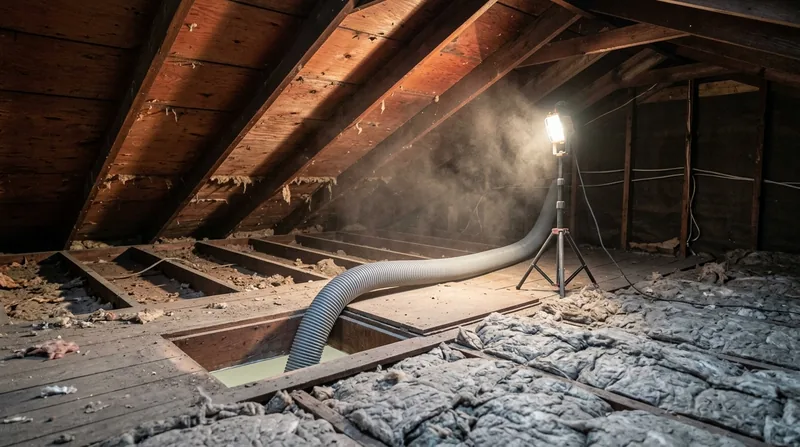




Insulation Removal in Jonesboro is the foundation of every retrofit job. Jonesboro sits on Crowley's Ridge with homes raised on vented crawl spaces and attics that bake at 130 to 150 degrees Fahrenheit through long humid summers. Old fiberglass, cellulose, or failed spray foam insulation traps moisture and loses its R-value over time. When that happens, you need it out before new foam goes in. We remove old insulation safely, haul it away, and prepare your attic, walls, or crawl space for a fresh start. Whether you're upgrading a 1920s frame cottage downtown or a 1990s brick ranch in Valley View, the job starts with a clean slate.
Why Insulation Removal Matters in Jonesboro's Climate
The Delta humidity and the long cooling season mean failed insulation doesn't just waste energy, it becomes a liability. Fiberglass that has absorbed moisture loses its insulating value entirely. Cellulose compacts and settles, leaving gaps. Spray foam applied by out-of-state crews without proper ventilation or thickness control leaves off-gassing, bad adhesion, and voids. Removing the failed layer is not optional; it's the only honest starting point for a retrofit that will actually perform.
- We extract old fiberglass, cellulose, or foam insulation completely from attics, walls, and crawl spaces.
- We haul all material off-site and dispose of it per local waste guidelines.
- We inspect the substrate for moisture damage, mold staining, or structural issues before new foam is applied.
- We vacuum and clean the cavity so new insulation bonds correctly to the framing.
- We document what was there so you understand what failed and why the retrofit will be different.
A clean removal is the difference between a retrofit that lasts and one that fails in five years.
Key info: Many Jonesboro homes built in the 1950s to 1980s have blown-in fiberglass that has settled to half its original thickness. A homeowner in Brookland removed their attic insulation and found only 2 inches of compacted material where 6 inches was specified. That's why removal and measurement come first.
How We Remove Insulation: Step-by-Step in Jonesboro
Insulation removal is not just shoveling debris into a truck. We use industrial-grade equipment, control dust, isolate the work area from living spaces, and verify that the substrate is dry and sound before we leave. The process differs depending on where the insulation is and what kind it is.
- We set up negative air containment and dust barriers to prevent fibers or foam particles from entering your home.
- We remove insulation using vacuum trucks, hand removal, or mechanical extraction depending on the material and space.
- We bag, bin, or load all material for off-site disposal.
- We inspect the bare substrate for moisture, rot, pest damage, or prior water intrusion.
- We document R-value, thickness, and condition so you have a clear record of what was there.
- We prep the cavity for new insulation installation or air sealing work.
The entire process is contained, documented, and leaves your space ready for the retrofit.
Example: A customer in Lake City had an attic filled with old blown-in cellulose that had absorbed moisture from summer humidity and roof leaks. We removed it completely, found water staining on the rim board, and stopped work until that was addressed. The removal alone took one day. Once the moisture was fixed, we returned to install new closed cell spray foam that would seal the space and stop moisture from entering again.
Insulation Removal Methods and What Works Where
| Method | Material Type | Best for |
|---|---|---|
| Vacuum Truck Extraction | Blown-in fiberglass, cellulose | Attics with deep or compacted fill; fastest removal with minimal dust in living areas |
| Hand Removal with Containment | Batts, rolls, foam boards | Walls, crawl spaces, or attics where vacuum access is limited; allows detailed inspection of cavities |
| Foam Demolition | Spray foam (closed or open cell) | Removing failed or poorly installed foam; requires careful substrate inspection for adhesion damage |
| Selective Cavity Extraction | Mixed or partial insulation | Wall cavities in pre-1980 homes where selective removal allows injection foam retrofit without demolition |
Each method is chosen based on the material, the space, and what comes next. We explain your options in the free estimate.
Insulation Removal Cost in Jonesboro: What to Expect
Pricing for insulation removal depends on the volume, the material type, access difficulty, and disposal. An attic with settled fiberglass costs less to remove than a crawl space with wet cellulose or failed spray foam. We price every job on-site because what you can't see, the depth, the compaction, the contamination, drives the real cost.
Starting point for a typical attic removal in Jonesboro is around $950 to $1,500. A crawl space with moisture and compacted material or a wall cavity retrofit with selective removal runs higher. Large commercial shells or industrial buildings with heavy insulation loads are priced on estimate. The free estimate includes a walk-through, measurement, material assessment, and a written breakdown so you know what you're paying for.
We also offer insulation replacement and re-insulation packages that bundle removal, disposal, and new foam installation into one project cost. See our pricing page for detailed breakdowns by job type.
Always get 2 to 3 estimates from contractors who will inspect the space in person. A price quoted over the phone without a site visit is a red flag. The lowest bid is often the one that cuts corners on containment, disposal, or substrate preparation, and you'll pay for it later when the retrofit fails or your home smells like chemicals for weeks.
What to Look for When Hiring an Insulation Removal Contractor Near Jonesboro
Finding a qualified contractor for insulation removal near Jonesboro means checking credentials, understanding the scope, and verifying that the contractor has done similar work in your specific situation. A good removal contractor is the foundation of a good retrofit. Here's what matters.
- Verify that the contractor carries full insurance and can provide a current certificate of insurance before work begins.
- Ask for references from recent removal jobs in Jonesboro, Bono, Brookland, or Lake City so you can talk to homeowners about their experience.
- Get a written estimate that includes the material type, volume, disposal method, and any substrate repair or prep work.
- Confirm that the contractor uses containment and dust control during removal and explains the re-entry plan before work starts.
- Ask what happens if the substrate is wet or contaminated, a contractor who says they'll spray foam over it anyway is not a contractor you want.
- Check that the contractor understands local building codes and permitting for your city if the removal is part of a larger renovation.
A removal contractor who takes time to inspect, document, and explain is the one who will set you up for a retrofit that actually works. Contact us for a free estimate and we'll walk you through the whole process.
Insulation Removal in Jonesboro: Pricing Guide
| Service | Price | Details |
|---|---|---|
| Attic Insulation Removal | Starting at $950 | Blown-in fiberglass or cellulose extraction with vacuum truck, disposal included, typical depth 6 to 12 inches |
| Crawl Space Insulation Removal | Starting at $1,200 | Hand extraction of batts or rolls, moisture assessment, containment barriers, disposal, substrate inspection |
| Wall Cavity or Injection Foam Retrofit Removal | Starting at $1,500 | Selective extraction from wall cavities pre-1980 homes without demolition, preparation for injection foam, per-cavity pricing |
| Spray Foam Demolition | Starting at $1,800 | Removal of failed closed or open cell foam, substrate damage assessment, adhesion repair evaluation, large jobs on estimate |
| Commercial or Large Building Removal | On estimate | Industrial sheds, metal buildings, warehouses, or multi-story commercial shells require site inspection for volume and complexity |
| Free Estimate and Site Inspection | No charge | Written breakdown of material, volume, method, cost, and timeline with no obligation to book, 24-hour response |
Indicative pricing, the exact cost depends on square footage, finish, and site access. Free personalized estimate within 24h at (870) 641-6546.


