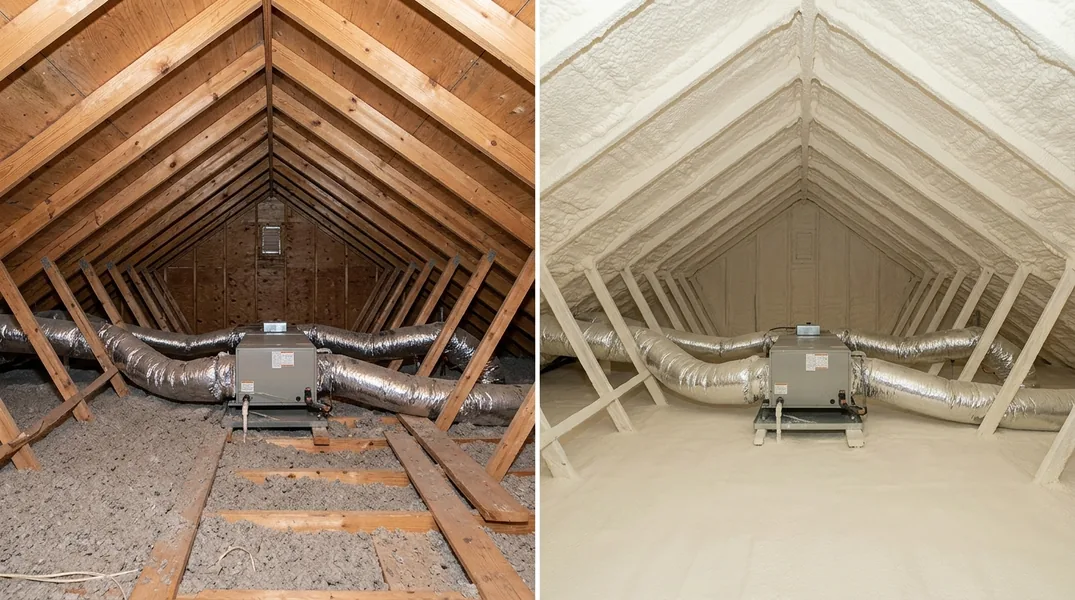
The Hidden Problem: Air Handlers in Scorching Attics
If you own a home in Jonesboro, you likely know that summer attic temperatures can reach 150 degrees or higher. What many homeowners don't realize is that their air conditioning system's air handler unit sits right in the middle of this heat furnace. The air handler is responsible for circulating cool air throughout your home, but when it's installed in an uninsulated or poorly insulated attic, it faces an uphill battle against extreme heat.
The problem compounds when your attic isn't properly sealed. Hot air infiltrates around ductwork, through gaps in the roof deck, and via any opening it can find. Your air handler works overtime trying to cool air that's already being heated by the surrounding environment. This inefficiency drives up your energy bills, reduces the lifespan of your HVAC system, and leaves you with uneven cooling throughout your home. Many homeowners in Jonesboro have discovered that the real solution isn't just adding insulation; it's creating a sealed, conditioned attic space.
Why Sealed Attic Insulation Outperforms Traditional Ventilation
For decades, builders have relied on ventilated attics with soffit and ridge vents to manage heat and moisture. The theory sounds reasonable: allow air to flow through the attic to carry away heat and prevent moisture buildup. In practice, however, ventilated attics in hot climates like Jonesboro create more problems than they solve. Hot outside air enters through soffit vents, bringing humidity and heat directly into the space where your air handler and ductwork operate.
Attic Spray Foam Insulation with a sealed roof deck eliminates this issue by creating an unvented attic. When the roof deck itself is insulated and sealed with spray foam, the attic becomes part of your home's conditioned envelope. Your air handler no longer battles 150-degree ambient temperatures; instead, it operates in a space that's closer to indoor temperature. This dramatic reduction in heat load translates directly to lower energy consumption and improved comfort.
A sealed attic also prevents moisture problems that plague ventilated attics. In humid climates, moisture-laden outside air entering through soffit vents can condense on cool surfaces, leading to mold growth and wood rot. By sealing the attic, you eliminate the pathway for humid outside air to enter, protecting your roof structure and insulation materials for decades to come.
How Spray Foam Creates an Unvented Attic That Works
Closed Cell Spray Foam Insulation is the gold standard for creating effective sealed attics. Applied directly to the underside of the roof deck, closed cell foam creates an air-tight seal that prevents outside air from entering. The material itself offers exceptional insulation value, typically R-6 per inch, which means even a modest 2-inch application provides R-12 insulation right at the thermal boundary.
The process begins with a thorough inspection of your attic space. Technicians identify all air leaks, gaps around ductwork, and penetrations that need sealing. Once the roof deck is clean and ready, the spray foam is applied in a continuous layer. As the foam expands and cures, it fills every crack and crevice, creating a seamless thermal and air barrier. Unlike fiberglass batts or blown-in cellulose, which leave gaps and settle over time, spray foam maintains its integrity and performance for the life of your roof.
For homeowners concerned about cost, Open Cell Spray Foam Insulation offers an alternative. While it has a lower R-value per inch (around R-3.5), open cell foam is less expensive and still provides excellent air sealing properties. The choice between closed cell and open cell depends on your budget, climate, and specific goals for your attic space.
Energy Savings and Comfort: What Jonesboro Homeowners Experience
Homeowners who have upgraded to sealed attic insulation consistently report significant energy savings. When your air handler operates in a properly insulated, sealed attic instead of a 150-degree furnace, your cooling system doesn't have to work as hard. Many homeowners see 15 to 30 percent reductions in summer cooling costs, depending on the existing condition of their attic and ductwork.
Beyond the numbers on your utility bill, sealed attics improve comfort. Rooms that were previously difficult to cool become more consistent. Hot spots near exterior walls diminish. Your HVAC system cycles less frequently, which means lower wear and tear and a longer operational life. In a region like Jonesboro where summer temperatures soar, these benefits translate to real quality-of-life improvements.
The payback period for a sealed attic insulation project typically ranges from 5 to 10 years, after which you're essentially enjoying free cooling efficiency. When you factor in extended HVAC lifespan, reduced repair calls, and improved home comfort, the investment becomes even more attractive.
Attic Spray Foam Insulation Near Me: When to Call a Professional
Installing spray foam insulation isn't a DIY project. The equipment is specialized, the application requires training, and improper installation can compromise your results. Professional installers understand local building codes, know how to work safely at heights, and have the experience to identify hidden issues in your attic that you might miss.
If you're noticing signs of an inefficient attic, it's time to reach out. High summer cooling bills, uneven temperatures throughout your home, moisture stains on ceiling drywall, or visible mold in your attic are all red flags that your current insulation strategy isn't working. A professional energy audit can identify exactly where your home is losing efficiency and determine whether sealed attic insulation is the right solution for your situation.
Jonesboro Spray Foam Insulation serves homeowners throughout the area with expert installation and honest advice. Call us at (870) 641-6546 to schedule a free estimate and learn how sealed attic insulation can transform your home's efficiency and comfort.
Attic Spray Foam Insulation Cost in Jonesboro: What to Budget
The cost of sealed attic insulation varies based on attic size, current condition, and the type of foam you choose. Closed cell spray foam typically costs more per square foot than open cell, but the superior R-value and moisture resistance often justify the investment. For a typical 1,500-square-foot attic, homeowners can expect to invest between $3,000 and $8,000 for a complete sealed attic project with closed cell foam.
When evaluating pricing, remember that you're not just buying insulation; you're investing in energy savings, HVAC longevity, and home comfort. Many utility companies and energy programs offer rebates or incentives for attic insulation projects, which can significantly offset your upfront cost. Jonesboro Spray Foam Insulation can help you navigate available incentives and provide transparent pricing for your specific project. Contact us today for a detailed quote that outlines exactly what's included in your sealed attic installation.
Looking for a professional spray foam insulation contractor in Jonesboro? Jonesboro Spray Foam Insulation responds fast for all your spray foam insulation needs.
Get a Free Quote