Understanding Arkansas R-Value Requirements for Attics
If you own a home in Jonesboro, understanding your state's insulation requirements is the first step toward maximizing energy efficiency and qualifying for incentives. Arkansas follows the International Energy Conservation Code (IECC), which sets minimum R-value requirements by state based on climate zones. For most of northeast Arkansas, including Jonesboro, the recommended attic insulation R-value is R-38 to R-49, depending on your specific location and the heating/cooling system you use.
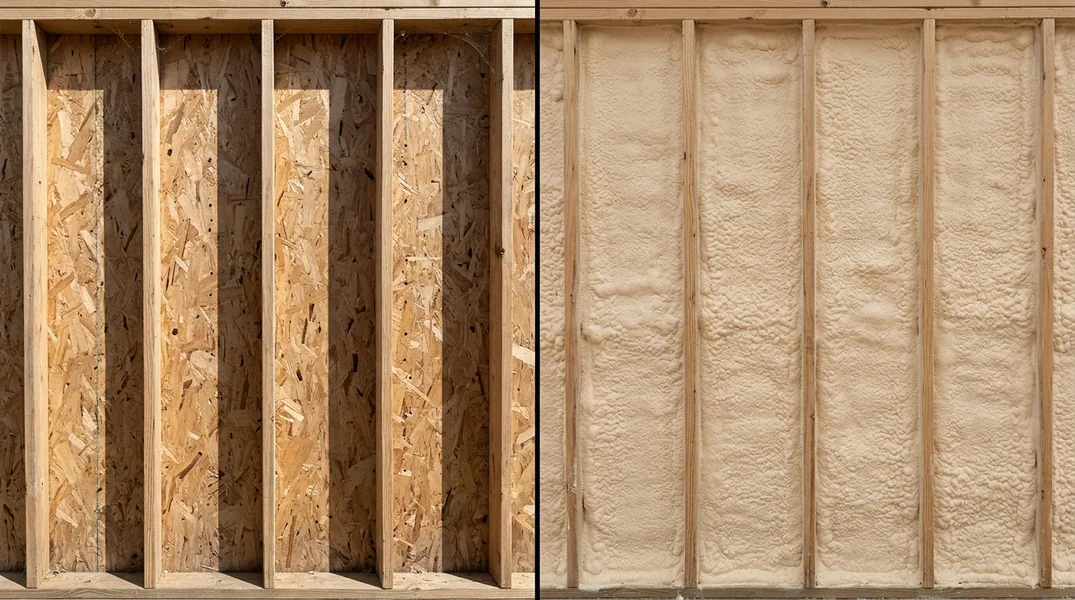
The spray foam insulation R value per inch varies significantly depending on the type of foam you choose. Closed Cell Spray Foam Insulation delivers approximately 6.0 to 6.5 R-value per inch, making it the most efficient option for tight spaces. Open Cell Spray Foam Insulation, by contrast, provides about 3.5 to 3.6 R-value per inch but is more affordable and still highly effective for most residential applications. This means that to reach R-38 with closed cell foam, you would need approximately 6 to 7 inches of material, while open cell would require roughly 10 to 11 inches. Both options significantly outperform traditional fiberglass batts and blown-in cellulose in terms of air sealing and thermal resistance.
How Thick Should Spray Foam Be: Finding the Right Depth for Your Attic
One of the most common questions homeowners ask is, 'How thick should spray foam be?' The answer depends on your climate zone, your current insulation levels, and your energy goals. In Arkansas, most attics benefit from a thickness that achieves at least R-38 for adequate winter heating and summer cooling performance. However, if you live in an older home or your attic currently has minimal insulation, you may want to aim for R-49 or even R-60 to maximize long-term energy savings and comfort.
The beauty of spray foam insulation is its versatility. Unlike traditional batts that require a specific thickness to work properly, spray foam can be applied in custom depths tailored to your attic's unique geometry. Whether you have rafters that are 5.5 inches deep, 7.25 inches deep, or irregular joist spacing, a professional installer can apply the exact thickness needed to meet code requirements and your personal comfort preferences. This precision is one reason why Attic Spray Foam Insulation has become the preferred choice for serious homeowners in the region who want to eliminate cold spots and drafts permanently.
Federal Tax Credits in 2026: What Changed for Arkansas Homeowners
Many homeowners still ask about the federal insulation tax credit. The Energy Efficient Home Improvement Credit (Section 25C) applied to insulation placed in service through December 31, 2025. Federal legislation signed in July 2025 ended it for projects completed after that date, so an Attic Spray Foam Insulation project finished in 2026 should not be planned around that credit unless Congress changes the law again. If your insulation was installed in 2025, keep your receipts and the manufacturer's product information for your tax preparer.
Utility programs are the place to look in 2026. Programs and terms change from year to year, so check with your electric provider for any insulation or air sealing program that is open when you plan your project, and ask what documentation they need before the work starts. We can give you the product details, R-value, and thickness installed for any application you submit.
Arkansas Utility Rebates and Local Incentive Programs
Some electric cooperatives and municipal utilities in northeast Arkansas run energy efficiency programs that can include insulation rebates. Whether one is open, what it pays, and what it covers depend on the utility serving your address and on the year, so ask your provider directly before you book the work. Some programs cover attic insulation, others start with an energy audit.
To find available insulation rebates in your area, contact your local electric utility or visit their website. Many programs ask for a written free estimate from the contractor before you apply, and some require pre-approval of the project. Jonesboro Spray Foam Insulation provides the estimate, the product data sheet, and the R-value and thickness installed, which is what a rebate application usually asks for.
Attic Spray Foam Insulation Cost in Jonesboro: What to Budget
Understanding the financial investment required for spray foam insulation is crucial for homeowners planning their energy upgrade. The spray foam insulation cost varies based on several factors, including the size of your attic, the R-value target you want to achieve, the type of foam selected (open cell versus closed cell), and local labor rates. In general, homeowners can expect to pay between $1.50 and $3.50 per board foot for spray foam installation, with most residential attic projects falling in the $2,000 to $6,000 range. Closed cell foam typically costs more per square foot than open cell, but the superior R-value per inch means you need less material to achieve your target R-value, which can sometimes offset the higher unit price.
When evaluating pricing from different contractors, be sure to compare the R-value being delivered, not just the thickness or square footage. A lower price that results in inadequate R-value is not a bargain. Reputable contractors will provide a detailed estimate that specifies the type of foam, the target R-value, the estimated thickness, and any rebates or incentives you may qualify for. If your utility runs an insulation program, ask about it before the work starts. If you would like a detailed estimate tailored to your specific attic, call Jonesboro Spray Foam Insulation at (870) 641-6546 to schedule a consultation with one of our energy efficiency specialists.
Wall and Injection Foam Insulation: Upgrading Beyond the Attic
While attic insulation often receives the most attention, exterior walls and rim joists are equally important for overall home energy performance. Wall & Injection Foam Insulation is an excellent solution for homes that need thermal improvements without extensive wall deconstruction. Injection foam is particularly valuable for older homes in Jonesboro that were built with hollow walls but minimal or no insulation. By drilling small access holes and injecting expanding foam directly into wall cavities, contractors can dramatically improve insulation performance and air sealing without disturbing your interior or exterior finishes.
Many homeowners do not realize that poorly insulated walls can account for 25 to 30 percent of total home heat loss or gain. Combining Attic Spray Foam Insulation with wall and rim joist improvements creates a comprehensive thermal envelope that maximizes energy savings and comfort. If your utility runs an insulation program, ask whether wall insulation is included, and consider a whole-home approach when planning the work. Contact Jonesboro Spray Foam Insulation at (870) 641-6546 or request a free estimate to learn how wall insulation improvements might benefit your specific property.
Looking for a professional spray foam insulation contractor in Jonesboro? Jonesboro Spray Foam Insulation responds fast for all your spray foam insulation needs.
Get a Free Quote